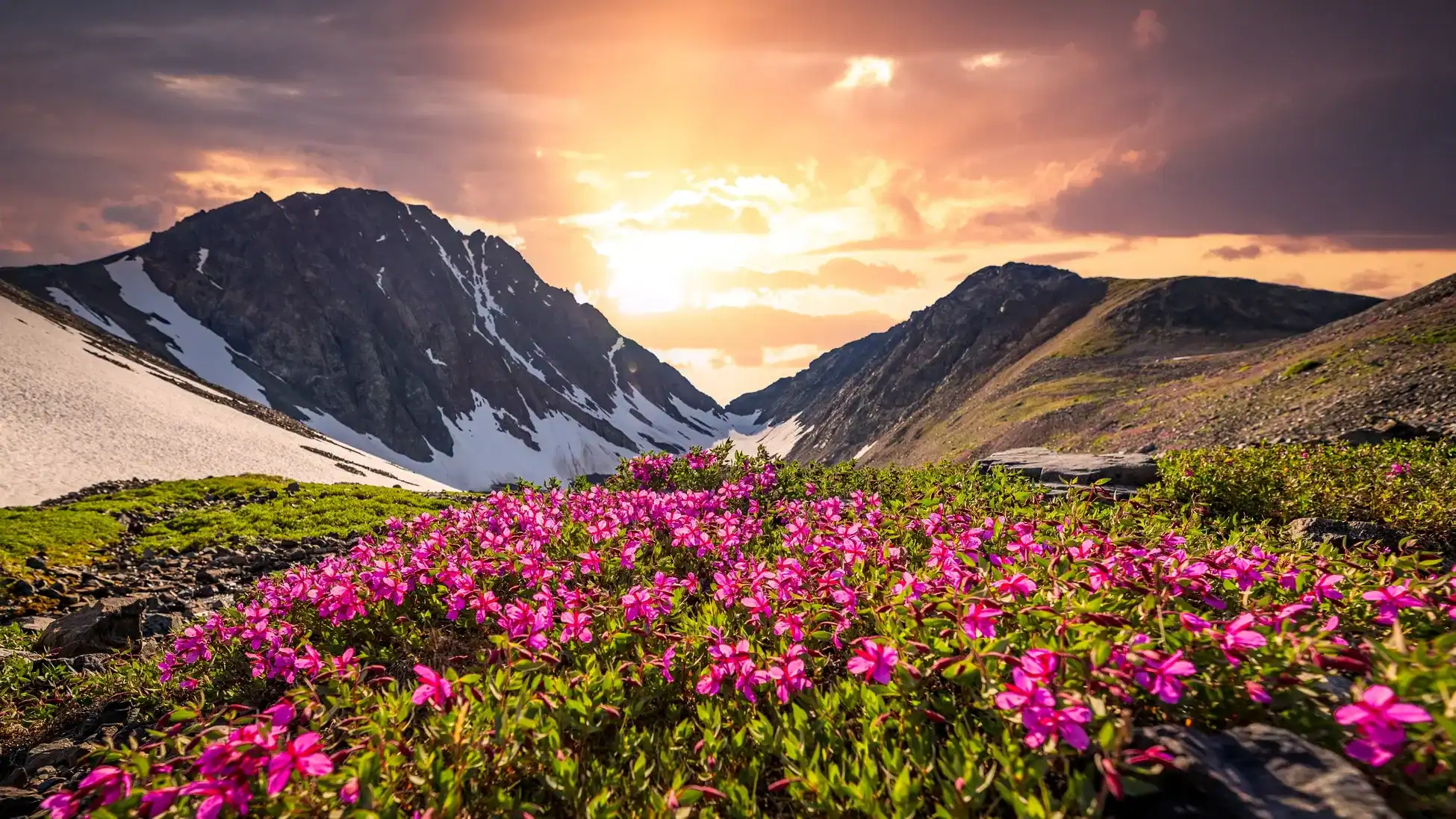
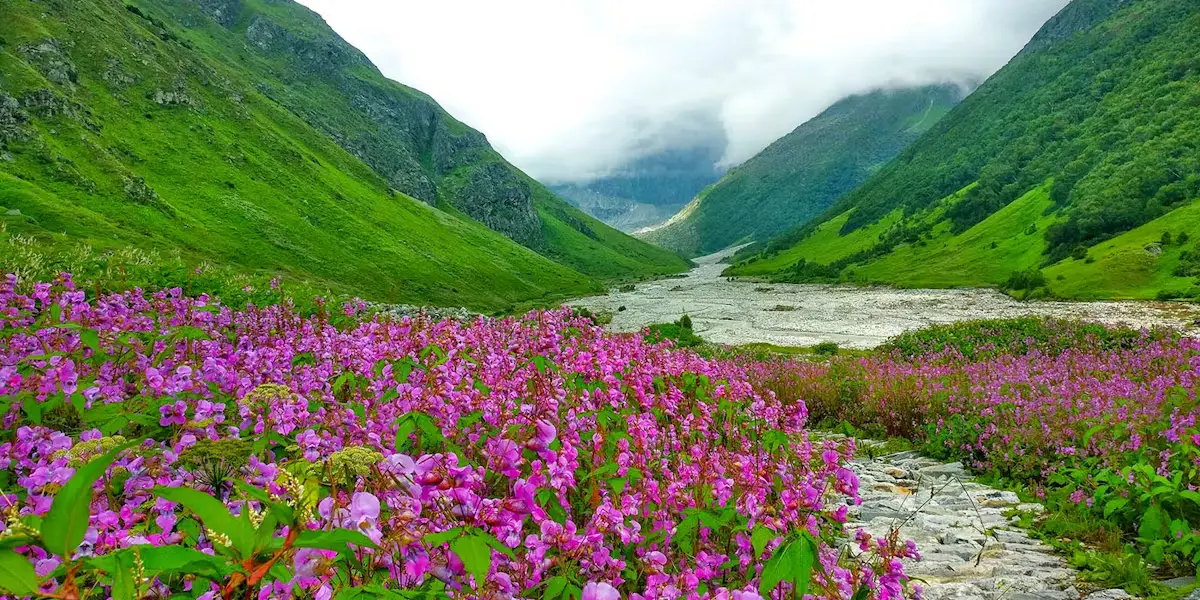
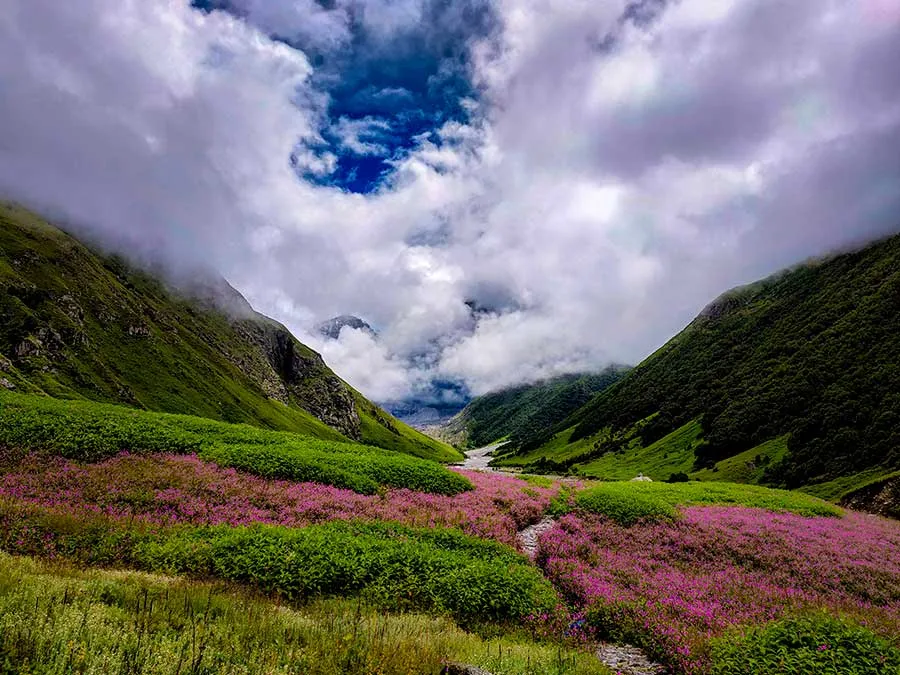
Valley of Flowers Trek is where dreams and reality merge into one breathtaking canvas of color and serenity. Tucked in Uttarakhand’s Chamoli district, this UNESCO World Heritage Site sits gracefully at 12,000 ft – an alpine meadow that bursts into bloom every monsoon. Imagine walking through a valley draped in over 300 species of exotic wildflowers – blue poppies, cobra lilies, Himalayan bellflowers, and the revered brahma kamal – all swaying under the Himalayan mist.
But this trek is not just about floral beauty. It’s about experiencing divinity in nature – crossing sacred confluences like Devprayag and Rudraprayag, staying in the quaint settlement of Ghangaria, and hiking up to Hemkund Sahib (15,200 ft), one of the world’s highest Gurudwaras.
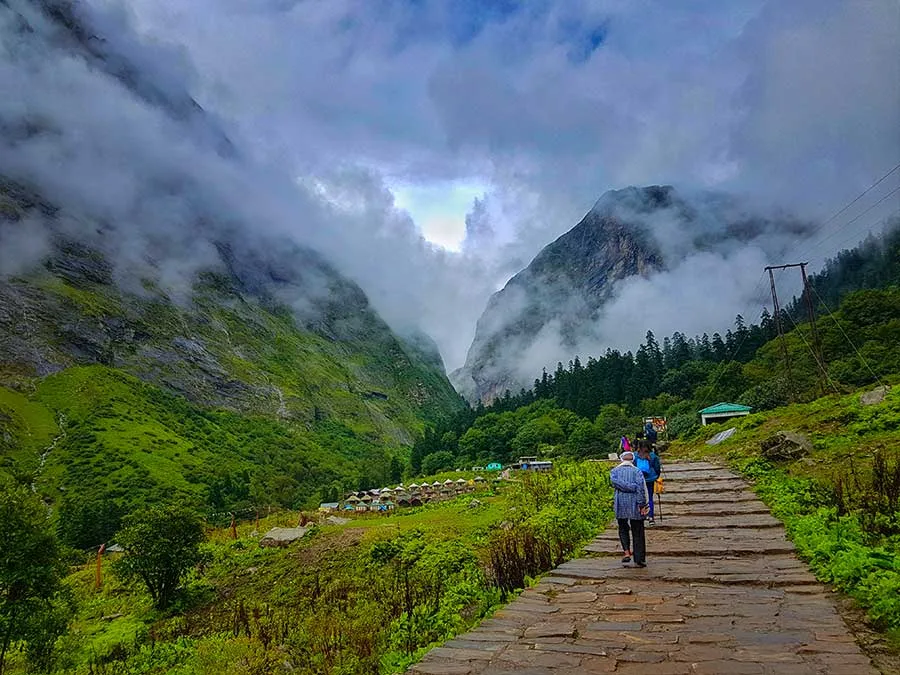
Every turn on this 6-day adventure reveals a new face of the Himalayas – roaring rivers, silent pine forests, and peaks that seem to touch the sky. Whether you are a first-time trekker or a mountain lover seeking soul-soothing landscapes, the Valley of Flowers Trek feels like stepping straight into heaven’s garden.
Quick Facts About Valley of Flowers Trek:
Region Covered: Chamoli District, UttarakhandStart/End Point: RishikeshHighest Altitude: Hemkund Sahib – 15,200 ft (4,630 m)Trek Difficulty: Easy to Moderate (suitable for beginners with basic fitness)Trek Distance: Approx. 38-42 km (round trip, including Hemkund excursion)Total Drive Distance: Approx. 520 km (round trip from Haridwar/Rishikesh via Joshimath)Temperature Range: Day: 8°C to 20°C | Night: 2°C to 10°C (varies by season and altitude)
Valley of Flowers Trek Package – ₹10,500
Step into nature’s most vibrant masterpiece with Himtrek’s Valley of Flowers Trek Package, thoughtfully curated for both comfort and adventure lovers. At just ₹10,500, you get a complete trekking experience – covering all essentials from guidance to stay.
This package ensures you experience the true essence of the Himalayas – from blooming meadows and cascading rivers to the serenity of Hemkund Sahib – all without worrying about logistics.
Planning your next Himalayan escape? Contact us for personalized trek recommendations, we will help you pick the perfect one for your vibe.
Best Time to do Valley of Flowers Trek
The best time for Valley of Flowers trek is from July to September, when the snow has melted and the valley transforms into a living rainbow.
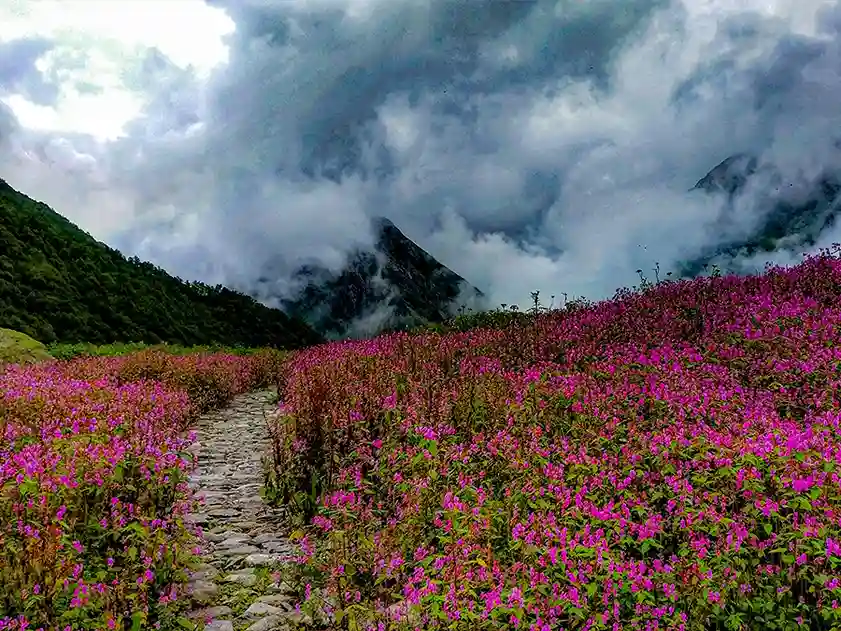
July: The monsoon paints the valley in lush greens and fresh blossoms begin to appear. Misty mornings and soft drizzles make it surreal.August: The valley reaches its floral peak – carpets of color stretch endlessly across alpine meadows. A paradise for nature photographers.September: The flowers begin to fade, but skies turn crystal-clear, offering majestic mountain views and peaceful trekking weather.
Temperature:
Day: 12°C – 20°C
Night: 4°C – 8°C
Expect gentle showers, cool winds, and that fresh alpine scent that only the Himalayas can offer.
The Legend Behind the Valley
Long before explorers stumbled upon it, locals believed the Valley of Flowers was the celestial abode of gods and fairies. They called it “Nandan Kanan” – the divine garden of Lord Indra.
In 1931, three British mountaineers – Frank Smythe, Eric Shipton, and R.L. Holdsworth – discovered this valley while returning from a Kamet expedition. Smythe described it as “a land where the entire valley seemed to be alive with color.” Since then, it has fascinated trekkers, botanists, and dreamers from around the world.
Even today, when you walk through its misty trails and floral carpets, it feels like stepping into a mythical world – untouched, unhurried, and infinitely pure.
Trek Preparation & Essentials for Valley of Flowers Trek
To make the most of your Valley of Flowers Trek, pack wisely:
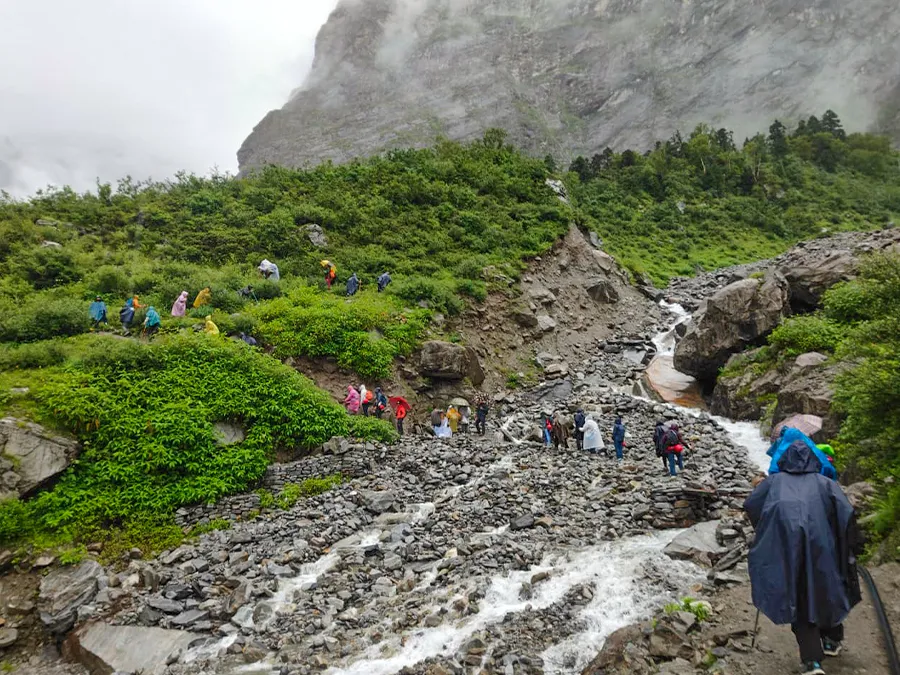
Clothing: 2-3 warm layers, a windproof jacket, waterproof poncho, and trekking pants.Footwear: Quality trekking shoes with good grip and ankle support.Accessories: Sunglasses, cap, gloves, and sunscreen.Essentials: Personal medication, water bottle, energy bars, and waterproof backpack.Fitness Tip: Prepare with short hikes and basic cardio at least two weeks before the trek.


 Back to Treks